SRINAGAR/JAMMU, OCTOBER 09: The 40-Hours Role Play Training Programme for Advocates /Experts, concluded today at the Srinagar and Jammu campuses of the J&K Judicial Academy. The practical training sessions were held on 05th, 06th, 08th and 09th October, 2026, under the aegis of the Mediation and Conciliation Project Committee, Supreme Court of India organized by the Mediation and Conciliation Committee, High Court of Jammu & Kashmir and Ladakh, in collaboration with the J&K Judicial Academy.
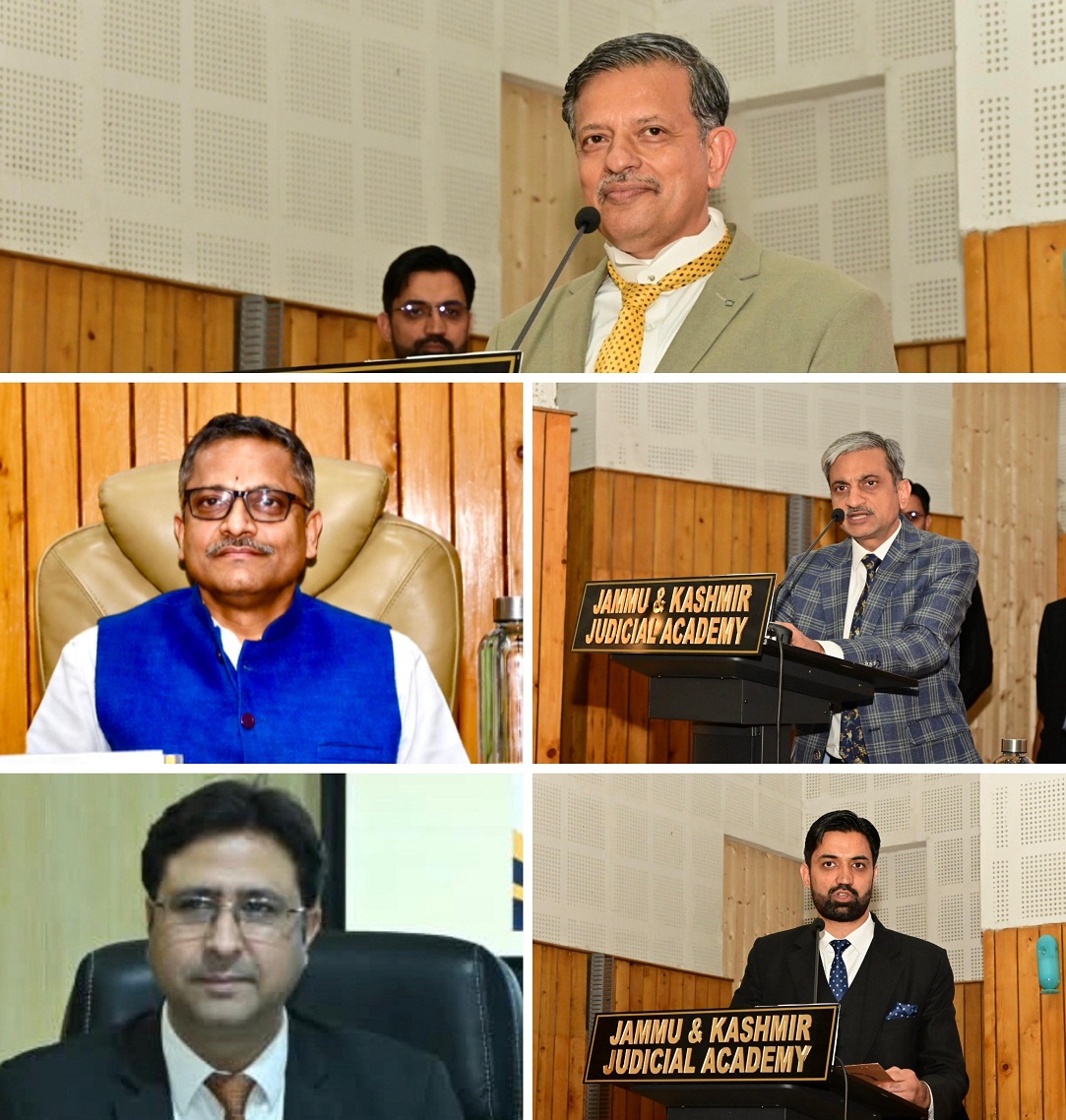
The second day of the Srinagar session was graced by Dr. Justice Pushpendra Singh Bhati, Chief Justice, High Court of Jammu & Kashmir and Ladakh, who highlighted the significance of mediation in strengthening the justice delivery system. Emphasizing its transformative potential, Chief Justice observed that mediation is not merely a professional skill but also a means of becoming a better human being and a more effective advocate, public prosecutor or judge. He underscored that practical exercises and role-play sessions foster empathy, understanding and sensitivity in resolving disputes.
Drawing upon examples from Indian epics, religious traditions and the history of Kashmir, Chief Justice highlighted the deep-rooted cultural and historical significance of mediation as a means of peaceful dispute resolution. Referring to Surah An-Nisa of the Holy Quran, Chief Justice observed that it envisages a process remarkably close to modern mediation, contemplating the appointment of representatives from both sides of a dispute with the express objective of restoring harmony.
Chief Justice emphasized that such examples across religious and cultural traditions demonstrate the enduring relevance of reconciliation and amicable settlement in resolving disputes.
Justice Rajnesh Oswal, Chairman, Mediation and Conciliation Committee, High Court of Jammu & Kashmir and Ladakh, was also present on the occasion. He continued guidance and support have been instrumental in advancing mediation initiatives in the Union Territories of Jammu & Kashmir and Ladakh.
Rajeev Gupta, I/C Director, J&K Judicial Academy, in his introductory address, welcomed the dignitaries, resource persons and participants, and highlighted the importance of practical training in developing effective mediation skills.
He emphasized that the interactive and role-play sessions provide participants with valuable hands-on experience in understanding the mediation process and facilitating amicable dispute resolution. He also underscored the importance of strengthening mediation as an effective means of resolving disputes and promoting a culture of mutual understanding and reconciliation.
At the Srinagar Campus, the resource persons, Monika Jalota and Swarn Sandhir, experienced advocates and certified mediators, conducted interactive sessions and role-play exercises aimed at strengthening the participants’ understanding of mediation techniques and their practical application.
The sessions were moderated by Faizan-ul-Haq Iqbal, Coordinator, Main Mediation Centre, who coordinated the proceedings and facilitated the conduct of the programme at the Srinagar Campus.
At Jammu Campus, the programme commenced with a welcome and introductory address by Sunil Kumar, Secretary, J&K Legal Services Committee, who welcomed the resource persons and participants and emphasized the importance of practical training in developing effective and competent mediators.
The Role Play Training Sessions at the Jammu Campus were conducted by Yashpal Singh Dahiya and Balbir Kaur Gandhi, Resource Persons, Mediation and Conciliation Project Committee (MCPC), Supreme Court of India.
During the concluding session at the Srinagar Campus, Justice Rajnesh Oswal, Chairman, Mediation and Conciliation Committee, High Court of Jammu & Kashmir and Ladakh, emphasised that mediation should be the preferred choice for dispute resolution rather than a last resort.
Justice Rajnesh Oswal observed that the spirit of mediation is inherent in everyday life, beginning within families and extending to schools, communities and professional relationships. Sharing his judicial experience, He highlighted how mediation can facilitate amicable settlements even in long-pending disputes where resolution may initially appear unlikely.
Justice Rajnesh Oswal encouraged the participants to apply their newly acquired skills in practice and contribute meaningfully to the “Mediation for the Nation 3.0” initiative, underscoring the potential of mediation to resolve disputes amicably and enable parties to move forward without bitterness.
Faizan-ul-Haq Iqbal, Coordinator, Main Mediation Centre, proposed the vote of thanks, expressing gratitude to the Supreme Court of India and the Mediation and Conciliation Project Committee (MCPC) for their support and guidance in facilitating the programme. He also acknowledged the contribution of the Mediation and Conciliation Committee, High Court of Jammu & Kashmir and Ladakh, the Director and staff of the J&K Judicial Academy, and the resource persons, Monika Jalota and Swarn Sandhir, for their valuable guidance and practical insights.
He appreciated the efforts of all those involved in organizing the training programme and the active participation of the trainees, expressing the hope that they would apply their newly acquired skills to advance mediation and contribute to the success of the “Mediation for the Nation 3.0” initiative.
The programme witnessed active participation by advocates/Experts, who engaged in interactive exercises and simulated mediation proceedings. The practical sessions enabled them to apply mediation principles, strengthen their communication and negotiation skills, and develop greater confidence in facilitating the resolution of disputes.
The programme forms part of the continuing efforts of the Mediation and Conciliation Committee, High Court of Jammu & Kashmir and Ladakh, under the aegis of the Mediation and Conciliation Project Committee (MCPC), Supreme Court of India, to strengthen the mediation mechanism and promote a culture of amicable dispute resolution.
The initiative aims to develop a pool of trained and competent mediators capable of facilitating timely, effective and sustainable settlements, thereby enhancing access to justice and reducing the burden of litigation.