RAJOURI, FEBRUARY 23: A one-day seminar on “Potential of Medicinal and Aromatic Plants for Conservation, Cultivation and Entrepreneurship Development with Special Reference to the Himalayan Region” was organized today in the Auditorium of Baba Ghulam Shah Badshah University (BGSBU). The seminar was hosted by the Centre for Biodiversity Studies (CBS) in collaboration with the Jammu & Kashmir Medicinal Plants Board, Directorate of AYUSH, J&K and District Administration Rajouri.
The programme witnessed enthusiastic participation from farmers, researchers, entrepreneurs, students and officials, highlighting the immense yet untapped potential of medicinal and aromatic plant resources in the Pir Panjal region.
The inaugural session commenced with a welcome address by Director CBS, Dr. Shreekar Pant, who underlined the ecological and economic significance of medicinal plant resources in the Himalayan belt.
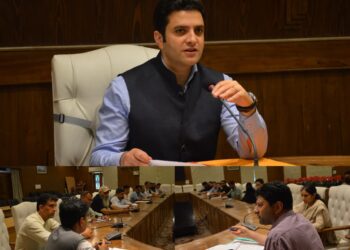
The Chief Guest, Deputy Commissioner Rajouri, holding additional charge of Registrar BGSBU, Abhishek Sharma emphasized the need for strong academia-industry linkage to foster innovation and entrepreneurship. He stressed the importance of integrating conservation with economic development and reiterated the university’s commitment towards community outreach, skill development and promotion of start-ups in the medicinal and aromatic plant sector. “Empowering local youth and farmers through scientific cultivation and value addition will significantly contribute to the socio-economic upliftment of the Pir Panjal region,” he maintained.
District Ayush Officer, Dr. Rakesh Kumar Shan highlighted the importance of awareness programmes in promoting conservation and commercial cultivation of rare herbs and medicinal plants.
Dean, School of Biosciences and Biotechnology, Dr. A.A. Shah listed recent biotechnological advancements in the medicinal and aromatic plant sector. Technical Officer, J&K Medicinal Plants Board, Dr. Wahid Ul Hassan, elaborated on various centrally sponsored schemes supporting cultivation and conservation initiatives.
Delivering the keynote address, Senior Principal Scientist at CSIR-Indian Institute of Integrative Medicine (CSIR-IIIM) and Nodal Officer CSIR Aroma Mission, Dr. Suphla B. Gupta described aromatic crop cultivation as a “game changer” for Himalayan farmers. She highlighted how diversification into high-value aromatic crops can drive rural entrepreneurship, enhance farmers’ incomes and ensure ecological sustainability.
Among others present included DFO Territorial, Naved Iqbal, Nodal Officer, Ayush Department Dr. B.K. Bajaj, along with doctors and paramedical staff from the Department of AYUSH.
The seminar featured invited talks by experts including Dr. Arvind Kumar Ishar, Senior Scientist & Head, KVK Rajouri; Dr. Tejinder Singh, Head, Department of Botany, GDC Rajouri; Dr. Danish Iqbal Raina, Coordinator, Centre for Multidisciplinary Studies and Research, BGSBU; and Dr. Mamta, Coordinator, Environmental Sciences. The speakers emphasized conservation strategies, scientific cultivation practices and entrepreneurship models in the medicinal and aromatic plant sector.
During the technical sessions, experts discussed practical aspects of shifting from traditional farming to high-value crops such as lemongrass and asparagus. Detailed deliberations on ginger and turmeric cultivation showcased their economic viability for the region. The seminar also focused on strengthening market linkages, promoting farmer cooperatives and exploring eco-tourism as sustainable avenues for boosting the local economy.
The event concluded with memento presentations and a formal vote of thanks by Dr. Mamta, Coordinator Environmental Sciences, reaffirming the collective commitment towards promoting green entrepreneurship and sustainable development in the Himalayan region.