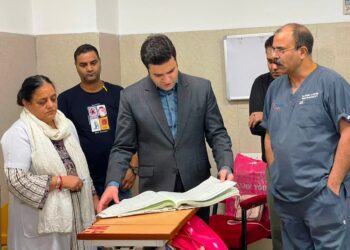
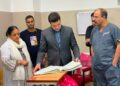
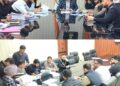
ANANTNAG, JULY 23: Government Medical College (GMC) Anantnag, in collaboration with the Emergency Medicine Academy, Manchester (UK), on Thursday conducted a full-day Advanced Trauma Training programme at the college to strengthen trauma management and emergency care services.
The programme, accredited with four credit hours by the J&K Medical Council, was organised under the supervision of Principal, GMC Anantnag, Prof. (Dr.) Junaid S. Wani, and coordinated by the Department of Pediatrics.
The training programme was aimed at supporting GMC Anantnag in establishing a full-fledged Emergency Medicine Department and enhancing the capacity of healthcare professionals in advanced trauma management.
Speaking on the occasion, Principal GMC Anantnag, reiterated the institution’s commitment to promoting academic excellence and improving patient care through such capacity-building initiatives. He said GMC Anantnag will continue to support academic programmes that enhance clinical skills and expressed confidence that the college would soon realise its vision of establishing a dedicated Emergency Medicine Department.
Course Director, Dr. Mehdi Hassan and Deputy Course Director Dr. Hamid Zafar of the Emergency Medicine Academy, Manchester, assured continued academic and technical support to GMC Anantnag in strengthening emergency and trauma care services in the region. They said the academy remains committed to assisting the institution at every level to establish emergency medicine services in line with international standards.
Around 60 participants, including Medical Officers, Consultants, Faculty Members and Resident Doctors from various departments, attended the training programme.
The programme focused on the A-to-E assessment of trauma patients and a structured, hands-on approach to conducting the complete primary survey.
The event also featured special case discussions and practical demonstrations of advanced emergency procedures, including chest drain insertion using the Seldinger technique, intraosseous (IO) cannulation, open surgical chest drain insertion, eFAST scan and resuscitative thoracostomy, where feasible. Hands-on training was also provided using manikins and sheep carcass models to enhance procedural skills in realistic simulation settings.
The organisers said the initiative marks a significant milestone in strengthening trauma management capabilities and advancing emergency medical care at GMC Anantnag.