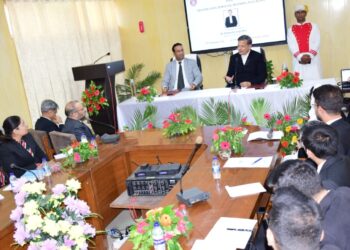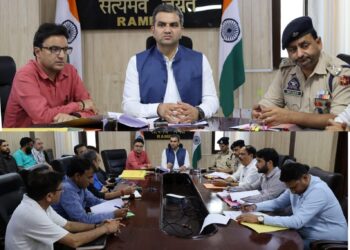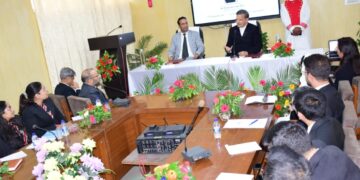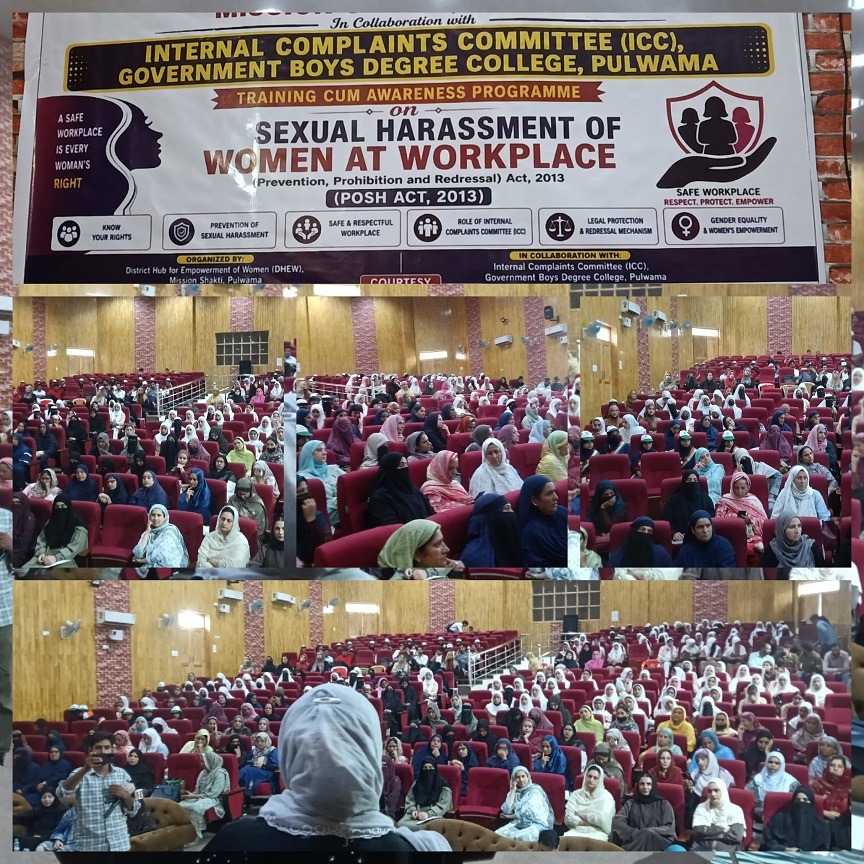
PULWAMA, AUGUST 12: An Awareness-cum-Training Programme on the Sexual Harassment of Women at Workplace (Prevention, Prohibition and Redressal) Act, 2013 (POSH Act) was organised today at Government Degree College (GDC), Pulwama, by the District Hub for Empowerment of Women (DHEW), Mission Shakti, Pulwama, in collaboration with the Internal Complaints Committee of Govt. Degree College Pulwama.
District Social Welfare Officer Pulwama, Azhar Amin, in his welcome address, highlighted the importance of creating safe, respectful and inclusive workplaces and urged all stakeholders to contribute towards preventing sexual harassment and ensuring dignity and equality for women.
Principal, GDC Pulwama, Dr. Bashir Ahmad Sheikh, in his inspiring address, emphasised the need for greater awareness about the provisions of the POSH Act and called upon institutions and individuals to uphold the principles of dignity, respect and gender equality. His motivating words added great value to the programme.
Renowned advocates from District Court Pulwama, Adv. Waheeda Anjum and Adv. Masood Andrabi, served as resource persons and provided detailed insights into the legal provisions of the POSH Act, the rights of women, the complaint mechanism, and the role and responsibilities of the Internal Complaints Committee.
Furthermore, speakers from the Social Welfare Department also sensitised the participants about the importance of awareness, prevention and institutional mechanisms for addressing issues related to the safety and dignity of women.
The interactive sessions provided participants an opportunity to understand the practical aspects of the POSH Act and seek clarification on matters relating to prevention, reporting and redressal of workplace sexual harassment.
The programme concluded with the administration of a pledge, wherein all participants pledged their commitment to promoting a safe, dignified, respectful and harassment-free environment for women at workplaces and in society.
The programme witnessed active participation from a diverse group of stakeholders, including teachers, ASHA workers, supervisors, Anganwadi Workers (AWWs), officers and officials from the Handicrafts Department, Agriculture Department, Horticulture Department, Animal Husbandry Department, and District Industries & Commerce Department.