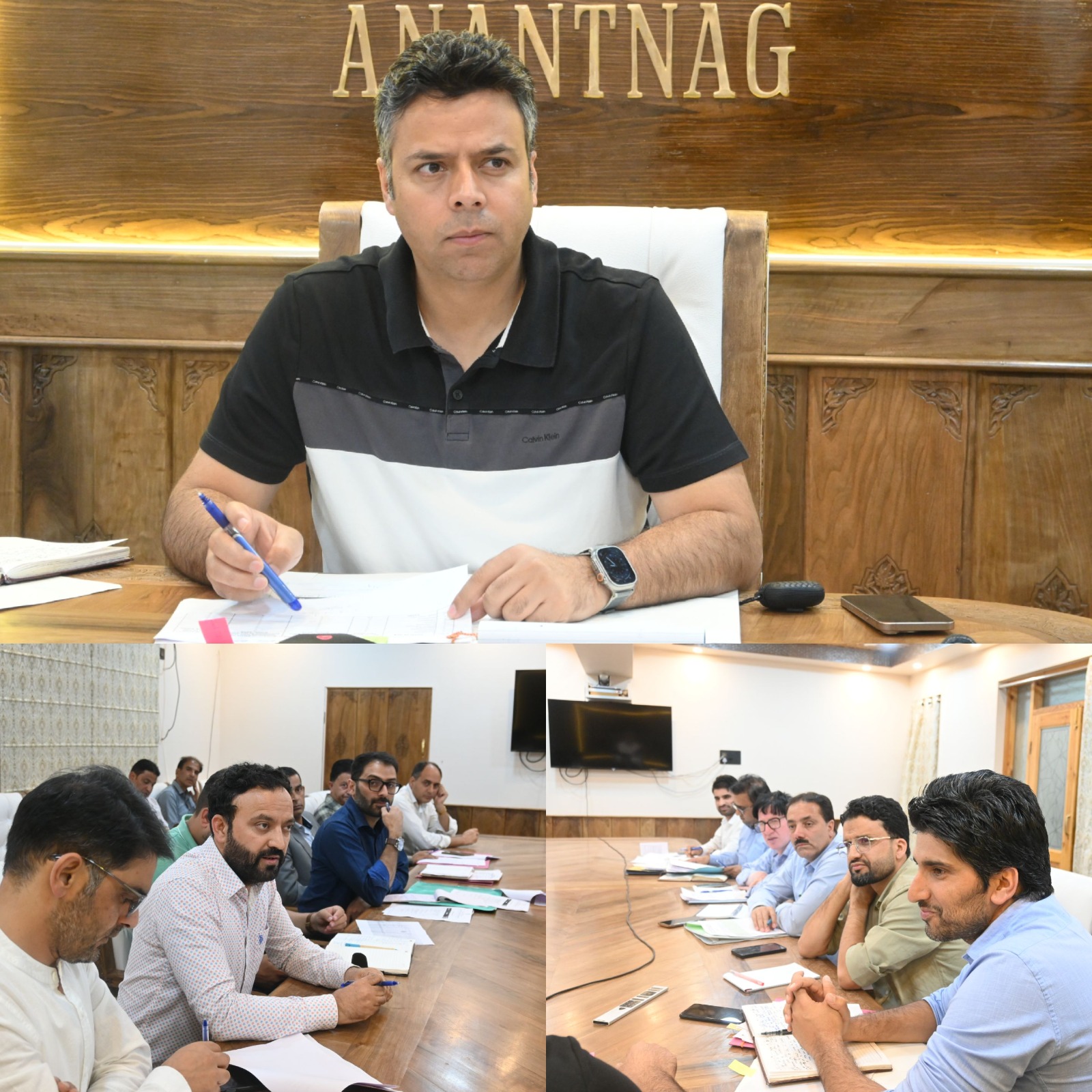
ANANTNAG, SEPTEMBER 21: Deputy Commissioner (DC) Anantnag, Dr. Bilal Mohiuddin Bhat, today chaired a meeting at the DC Office to review the status of solid waste management, cleanliness and sanitation initiatives, parking facilities, drainage arrangements, and street-light infrastructure in urban areas of the district.
Detailed discussions on urban parking-related issues, drainage arrangements, ongoing parking and beautification projects, and initiatives key to solid and liquid waste management were held on the occasion.
The meeting was attended by Additional Deputy Commissioner (ADC), Dr. Muzamil Maqbool; Chief Planning Officer(CPO), Tawseef Ahmad; Assistant Commissioner Revenue (ACR), Tariq Ahmad Malik; Assistant Commissioner Panchayat (ACP), Executive Engineer UEED, Chief Executive Officer MCA, Executive Officers of various Municipal Committees, and other concerned officers.
At the outset, the EOs of Urban Local Bodies briefed the Deputy Commissioner on the existing civic infrastructure and the measures being undertaken to ensure cleanliness, proper sanitation, and effective solid waste management in their respective jurisdictions. The meeting was informed that door-to-door collection of solid waste is being carried out across the Municipal Committees through dedicated vehicles.
The officers apprised the chair of the functioning of Solid Waste Treatment Plants (STPs) in ULBs and the measures being taken for the proper collection and management of solid and liquid waste.
During the meeting, the Deputy Commissioner reviewed the action taken by the ULBs to improve sanitation and ensure proper waste disposal. He stressed the need for sustained cleanliness drives, effective monitoring of waste collection and transportation, and timely garbage disposal to keep public spaces clean and hygienic.
Addressing the meeting, the DC directed the concerned officers to identify suitable land for the creation of additional parking facilities, particularly around the district headquarters and in peripheral areas of Municipal Committees, keeping in consideration the increasing vehicular pressure and public requirements.
Emphasizing the need for sustained efforts, Dr. Bilal called for strengthening street-light infrastructure across the district and ensuring timely repair and maintenance of existing lighting facilities, particularly along important roads, public places, and urban stretches. He asked the concerned departments and executing agencies to maintain close coordination and ensure the completion of ongoing works within stipulated timelines.
At conclusion, the DC instructed the participants to undertake regular monitoring of sanitation, parking, drainage, and street-lighting arrangements, while addressing identified gaps on priority.