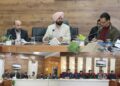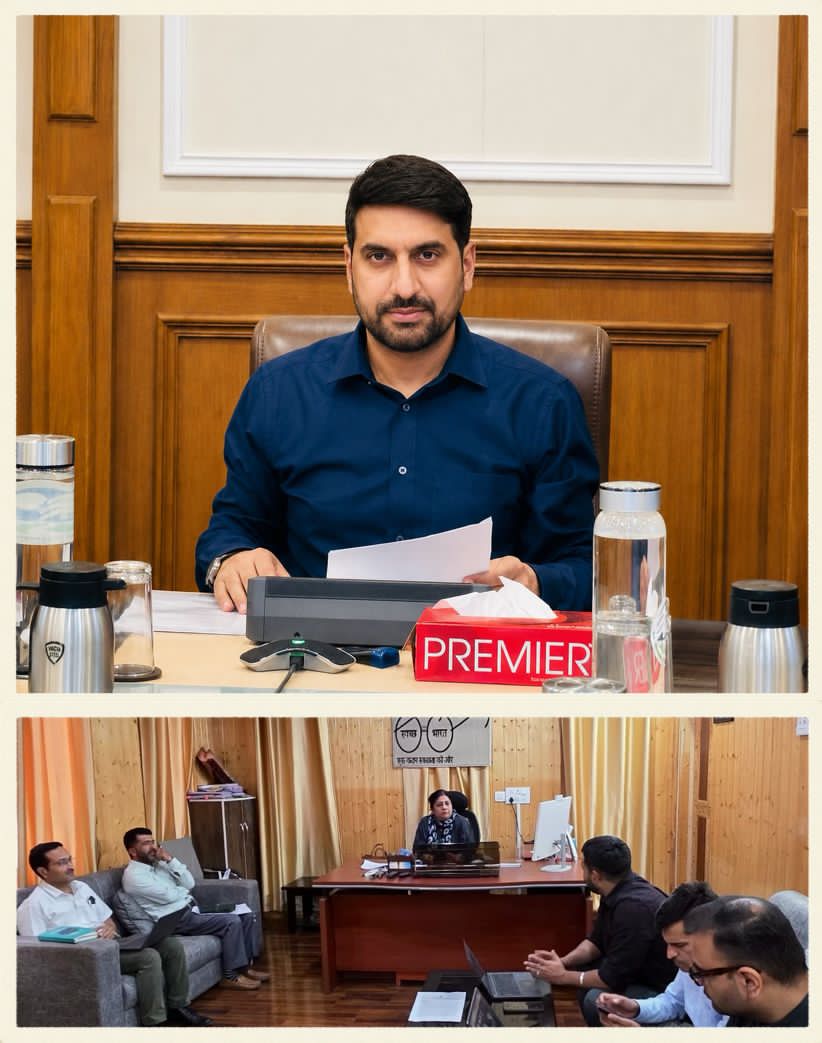
JAMMU, MAY 15: Secretary, Rural Development Department (RDD) and Panchayati Raj, Mohammad Aijaz Asad, today chaired a high-level review meeting to assess implementation of the Solid Waste Management (SWM) Rules, 2026 and directed all districts and field officers to ensure strict and time-bound compliance with Supreme Court directions on solid waste management.
The meeting was attended by Director General Rural Sanitation Anoo Malhotra, Director Finance Umar Khan, Superintending Engineers REW, Deputy Directors Rural Sanitation, Assistant Commissioners Panchayat and other concerned officers.
The Secretary emphasized that the Supreme Court, through its various orders especially dated February 19, April 29 and May 5, 2026, has issued comprehensive directions to States, UTs, District Collectors and Pollution Control Boards for effective implementation of the SWM Rules, 2026.
He directed all districts to submit comprehensive plans for door-to-door waste collection across rural areas and submit the same within given timelines for strengthening waste collection systems.
Aijaz Asad stressed constitution of Village and Block Sanitation Committees under overall supervision of District Sanitation Committees (headed by DCs), wherever pending to improve coordination, monitoring and implementation of sanitation initiatives.
He also directed wide dissemination of the SWM Rules, 2026, including translation into regional languages, and called for awareness workshops at UT, district and block/panchayat levels to educate communities on scientific waste management practices.
The Secretary informed that UT-level action plans had already been submitted in compliance with earlier Supreme Court directions and stressed that the focus must now shift to effective ground implementation and submission of compliance reports as per indicated timelines.
He reiterated mandatory four-stream waste segregation — wet, dry, sanitary and special care waste — across all rural local bodies without exception.
Aijaz Asad further directed districts to identify and register all Bulk Waste Generators (BWGs), operationalise Special Cells under Deputy Commissioners for close monitoring of SWM implementation, and ensure scientific management of legacy dumpsites through biomining and bioremediation.
He stressed effective use of the mWater portal for monitoring sanitation assets and directed that all assets be made fully functional within stipulated timelines. He also warned against open burning of waste, stating that zero-tolerance enforcement would be adopted.
During the meeting, Director General Rural Sanitation presented a detailed overview of the SWM Rules, 2026, including roles and responsibilities of departments, Panchayati Raj Institutions and implementing agencies.