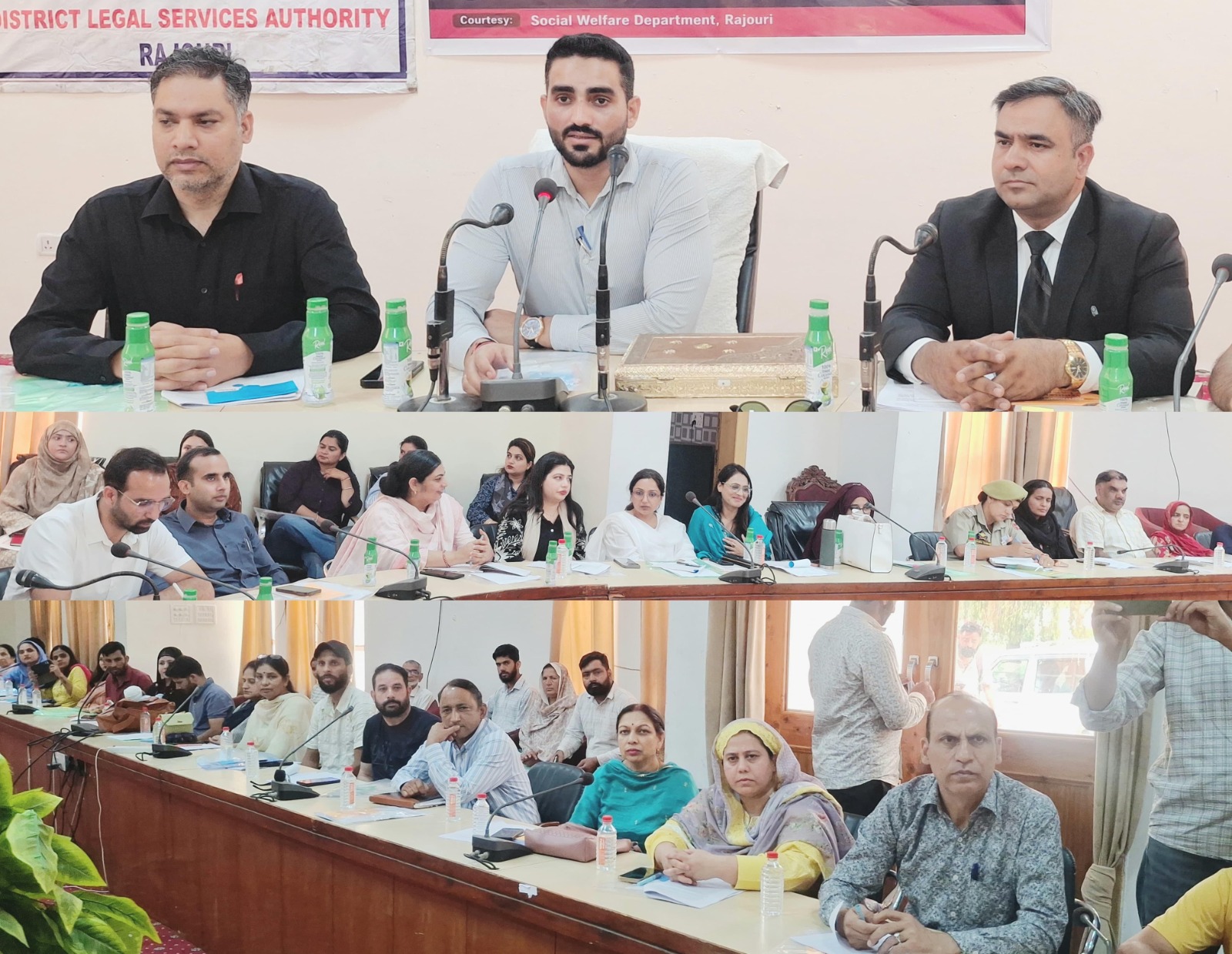
RAJOURI, JULY 10: District Administration Rajouri, in collaboration with the Social Welfare Department and District Legal Service Authority, today organised a Mega Awareness Programme-cum-Workshop on the Sexual Harassment of Women at Workplace (Prevention, Prohibition and Redressal) Act, 2013 (POSH Act, 2013) to spread awareness about the legal provisions of the Act and promote a safe, dignified and harassment-free work environment.
The programme was presided over by Additional Deputy Commissioner Rajouri Ravi Kumar Sihag.
Among others present were Assistant Commissioner Revenue, Mohammad Jahangir Khan; District Social Welfare Officer Abdul Raheem, Advocates Ashfaq Lone and Deepakshi from the District Legal Services Authority (DLSA), officers from different departments, employees and other stakeholders.
At the outset, DSWO Abdul Raheem delivered a detailed presentation on the objectives and key provisions of the POSH Act, 2013. He elaborated on the rights of women at the workplace, the responsibilities of employers, the constitution and role of Internal Committees, complaint redressal mechanisms, timelines prescribed under the Act and the legal safeguards available to victims of workplace sexual harassment. He emphasised that awareness of the law is essential to ensuring dignity, equality and justice for every working woman.
Addressing the gathering, the ADC highlighted the significance of the POSH Act in safeguarding the rights, dignity and safety of women in workplaces. He said that every institution and organisation has a moral and legal responsibility to provide a secure, respectful and inclusive working environment where women can perform their duties without fear of harassment or discrimination.
The ADC stressed the need to sensitise all employees about the provisions of the Act so that awareness translates into responsible behaviour and mutual respect at workplaces. He urged all departments to organise similar awareness programmes at regular intervals and ensure that the message of workplace safety reaches every employee. He also called upon the participants to act as ambassadors of awareness by disseminating information about the Act within their respective offices and communities.
The ACR also addressed the gathering and underscored the importance of creating safe, respectful and gender-sensitive workplaces. He emphasised that awareness of the provisions of the POSH Act, 2013, coupled with collective responsibility and institutional accountability, is essential for preventing workplace harassment and ensuring a secure and dignified working environment for all employees. He urged participants to actively disseminate awareness about the Act and contribute towards fostering a culture of equality, respect and mutual trust in every workplace.
Advocate Ashfaq spoke about the legal framework of the POSH Act, explaining the rights of aggrieved women, the procedure for filing complaints and the legal safeguards available under the Act. Advocate Deepakshi sensitised the participants on the importance of gender equality, workplace ethics and the need to foster an environment of dignity, mutual respect and zero tolerance towards sexual harassment. She encouraged employees to remain aware of their rights and responsibilities and to contribute towards building safe and inclusive workplaces.
The composition, roles and functioning of the Internal Complaints Committee (ICC) and the Local Complaints Committee (LCC) under the POSH Act, 2013 were explained in detail. The procedure for filing complaints, mechanism for inquiry and redressal and safeguards available to aggrieved women were elaborated upon. It was highlighted that every establishment employing ten or more persons is mandated to constitute an Internal Complaints Committee, while the Local Complaints Committee serves as the designated redressal mechanism for establishments where an ICC has not been constituted or where the complaint is against the employer.
Participants were sensitised about these institutional mechanisms to ensure timely, fair and confidential redressal of grievances.
The programme concluded with an interactive session in which participants raised queries regarding the implementation of the Act and the functioning of complaint redressal mechanisms. The speakers responded to the questions and reiterated the commitment of the district administration to promoting awareness, gender equality and safe workplaces across Rajouri.