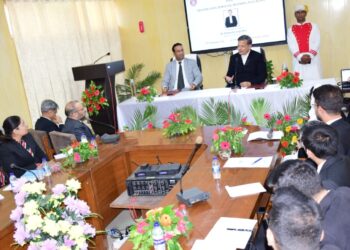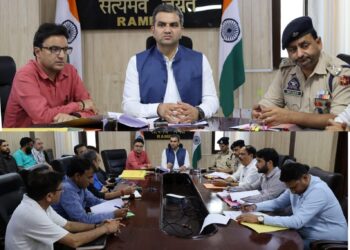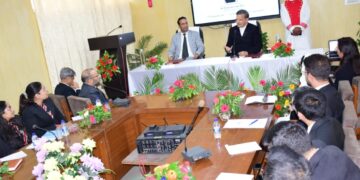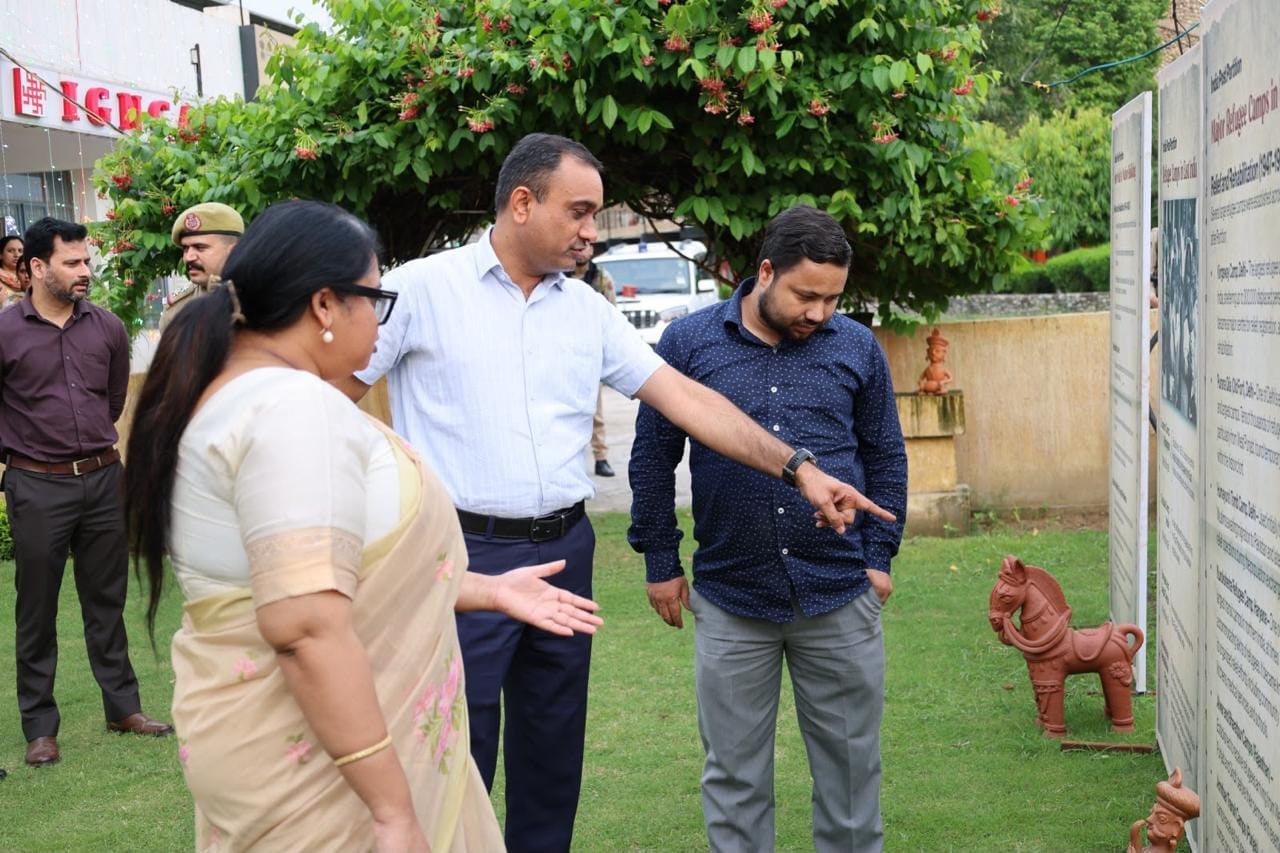
JAMMU, AUGUST 14: Divisional Commissioner Jammu Ramesh Kumar, today addressed a programme titled “Memories of Survivors: Panel Discussion on Partition Horrors Remembrance Day” organized by the Indira Gandhi National Centre for the Arts (IGNCA), Regional Centre Jammu & Kashmir, in collaboration with the District Administration, Rajouri.
The event was organised with an aim to document and highlight the experiences and memories of people affected by the forced migration and displacement from Pakistan Occupied Jammu and Kashmir (PoJK) during 1947 and 1965.
In his address, the Divisional Commissioner highlighted the resilience of these families, who rebuilt their lives despite the hardships and established themselves through their determination and perseverance.
The programme was also attended by Devyani Singh Rana MLA Nagrota and Prof. Jawaid Iqbal, Vice Chancellor, Baba Ghulam Shah Badshah University Rajouri.
The event commenced with a minute’s silence in memory of those who lost their lives during partition. In her opening remarks, Shruti Awasthi, Regional Director, IGNCA Regional Centre J&K, emphasised the need to document the Partition experiences of Jammu and Kashmir.
Abhishek Sharma, Deputy Commissioner, Rajouri, shared a deeply personal account of his grandfather’s escape from Muzaffarabad during the violence and targeted killings of government officials.
A documentary highlighting the experiences and memories associated with Muzaffarabad and Rajouri during the Partition was also screened during the programme.
The panel discussion brought together survivors, scholars and academicians. Bakshi Raj, a 99-year-old Partition survivor, shared his first-hand experiences and memories of the period. Ankush Sabharwal spoke about his grandfather’s flight from Mirpur and his experiences in refugee camps. Suman Suri recalled accounts of massacres and the extreme circumstances faced by families during the violence, including the tragic experiences of parents who took desperate measures to protect their daughters from abduction.
The discussion also featured scholarly perspectives on the nature of the violence and displacement. Dr. Madhulika Singh spoke about the mobilisation of tribal groups, while Prof. Sindhu Kapoor presented a different historical interpretation, arguing that the groups described as “tribals” included Pakistani troops operating in disguise. Prof Yashpal Sharma stressed the need to preserve Partition history and sacrifices for future generations and urged researchers to document literature from villages.
Dr. Ajay Singh stressed the need for continued scholarly research and the development of a collective consciousness around the historical and cultural heritage of PoJK, including its shrines, sacred spaces and historical traditions. Other scholars and academicians also contributed to the discussion, highlighting the importance of preserving oral histories and first-hand memories before they are lost.