SOMNATH (GUJARAT), JULY 02: Continuing their journey under the Somnath Swabhiman Yatra–2026, pilgrims from Jammu & Kashmir on Thursday explored several religious, historical and cultural landmarks in Gujarat.
The pilgrims visited Baan Ganga and Balika Tirth, offering prayers for peace, communal harmony and prosperity.
The yatris later visited the historic Ahilyabai Temple, paying homage to Maharani Ahilyabai Holkar, the ruler of Malwa renowned for restoring several revered temples.
At the Somnath Museum and Photo Gallery, the pilgrims viewed a collection of rare sculptures, archaeological artefacts, ancient inscriptions and historical exhibits chronicling the legacy of the Somnath Temple and its repeated reconstruction.
The pilgrims also visited Somnath Chowpatty to view the Arabian Sea. They explored the local haat, interacting with traditional artisans and appreciating Gujarat’s vibrant handicrafts and folk traditions.
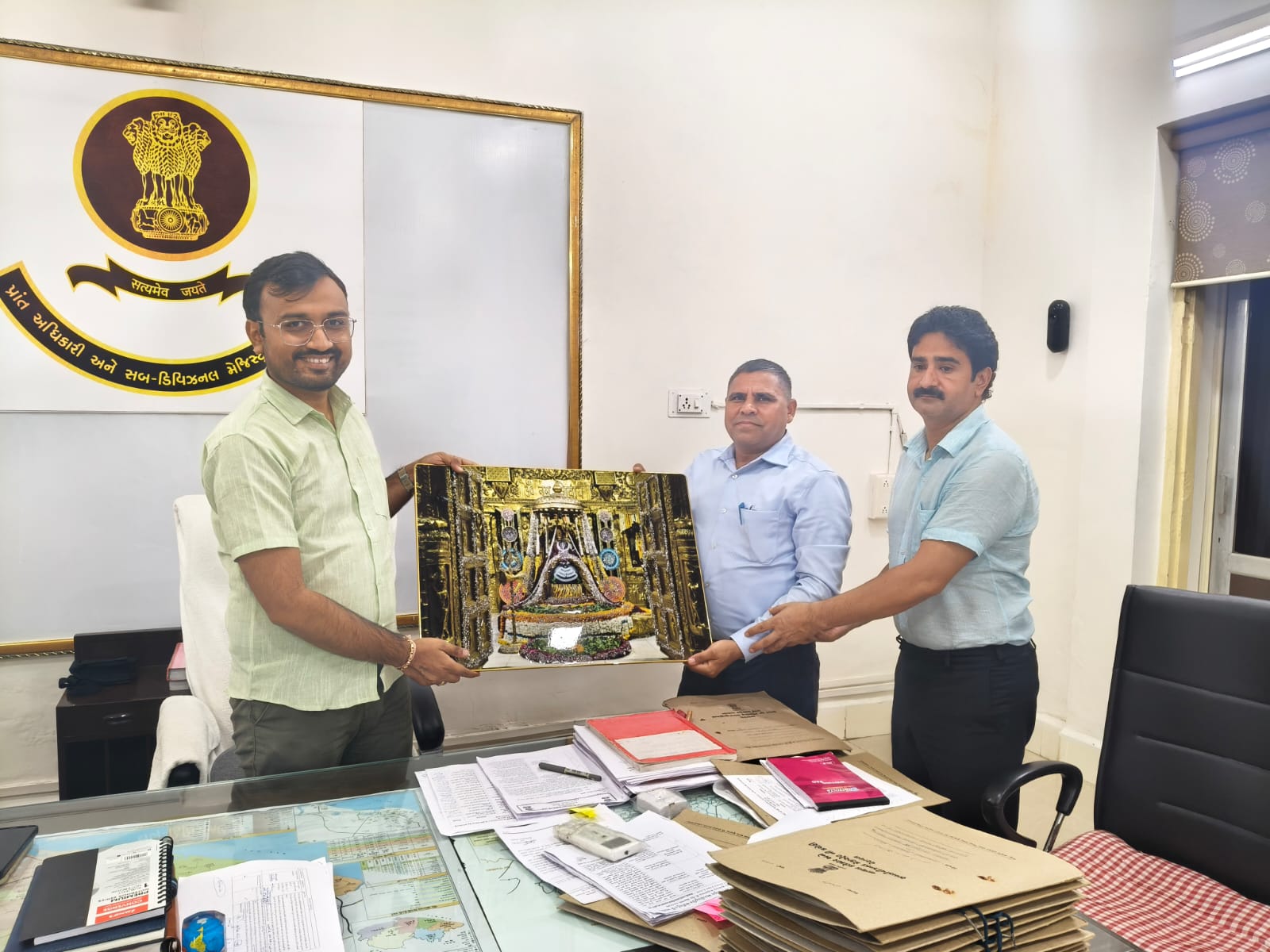
Earlier, Additional Secretary Jammu & Kashmir Academy of Art, Culture and Languages (JKAACL) Lal Chand, accompanied by OSD (State Yatra Coordinator) Dr Ajeet Singh Rana, called on Sub-Divisional Magistrate Veraval Jaimin Kakadiya.
The Additional Secretary expressed gratitude to the Government of Gujarat, Gir Somnath district administration, Veraval sub-divisional administration and the Shree Somnath Trust for arrangements regarding the safety, security and accommodation of the pilgrims. He appreciated the Shree Somnath Trust for facilitating darshan at the Shree Somnath Mahadev Temple. He also commended Nodal Officer (Dream Path Creation) Dhruv, Kishorebhai Padiyar and the coordination team for their support in conducting the yatra.
As a gesture of goodwill, SDM Jaimin Kakadiya presented a portrait of Lord Shree Somnath Mahadev to the Additional Secretary. The exchange symbolised the cultural bond between Gujarat and Jammu & Kashmir.
Interacting with the media, the pilgrims expressed gratitude to the Governments of India, Gujarat and Jammu & Kashmir, the Shree Somnath Trust and all authorities concerned for their hospitality and planning. They described the yatra as an inspiring experience that fostered emotional integration and cultural harmony.