Mubashir Alam Wani
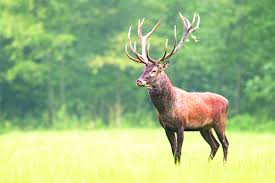
Srinagar, Feb 17 : A groundbreaking scientific study has, for the first time, mapped the reproductive seasonality and stress patterns of the critically endangered Kashmir Hangul (Cervus hanglu) using non-invasive physiological monitoring.
The findings of the research, as per the news agency, provide crucial insights for conservation efforts and the establishment of captive breeding programs.
The study, conducted in Dachigam National Park—the last viable habitat of the Kashmir Hangul—used fecal hormone analysis to determine reproductive cycles and stress levels in both male and female deer. Researchers monitored oestrogen, progesterone, testosterone, and glucocorticoid metabolites, offering a baseline for future conservation strategies.
REPRODUCTIVE SEASONALITY
The study highlights that reproductive cycles in Hangul, a species inhabiting subtropical latitudes, differ significantly from their counterparts in higher northern latitudes. Female Hangul exhibited dispersed mating and birth patterns, while males had a more synchronized rutting season from October to December.
Elevated progesterone levels in females between January and March indicated pregnancies, with a sharp drop in April signalling parturition.
Unlike other red deer species that follow tightly synchronized reproductive cycles, the Hangul displays an extended and variable mating season, likely influenced by food availability and environmental factors. The results suggest that females time their reproductive cycles to ensure that birthing coincides with peak forage availability.
STRESS HORMONE PATTERNS
Both male and female Hangul exhibited increased stress levels associated with reproductive activities. Males experienced a significant spike in glucocorticoid levels during the rutting season (October–December), aligning with increased competition for mates. A second peak in stress was observed in May, coinciding with seasonal migrations and disturbances caused by livestock herders moving into higher elevations.
Female Hangul showed elevated stress levels during parturition in April and May, further highlighting the importance of minimizing disturbances during these critical periods.
IMPLICATIONS FOR CONSERVATION
The study underscores the urgent need to implement conservation measures tailored to Hangul’s unique reproductive strategies. Key recommendations include
Minimising Human Disturbances: The timing and duration of mating and birthing seasons should be taken into account to keep Dachigam National Park free from anthropogenic disturbances, particularly livestock grazing and tourism.
Establishing a Captive Breeding Program: The research provides a critical baseline for initiating Hangul breeding programs, which have so far remained ineffective due to a lack of physiological data.
FURTHER RESEARCH USING CAMERA TRAPS
The study calls for the use of camera trapping surveys to further authenticate the timing of mating and birthing, ensuring more precise conservation strategies.
Since Hangul populations remain isolated due to habitat fragmentation, connectivity corridors should be developed to enhance genetic diversity and reduce inbreeding risks.
With fewer than 400 Hanguls left, this study serves as a wake-up call for policymakers and conservationists. It highlights the need for a multi-faceted conservation approach that integrates ecological research, habitat protection, and stringent policies to curb human-induced stress on this critically endangered species.
The researchers stress that further studies were needed to validate the hormone analysis techniques used, given the absence of captive Hangul populations for comparison.
Nonetheless, this study marks a significant step forward in understanding and conserving the Kashmir Hangul, offering hope for its survival