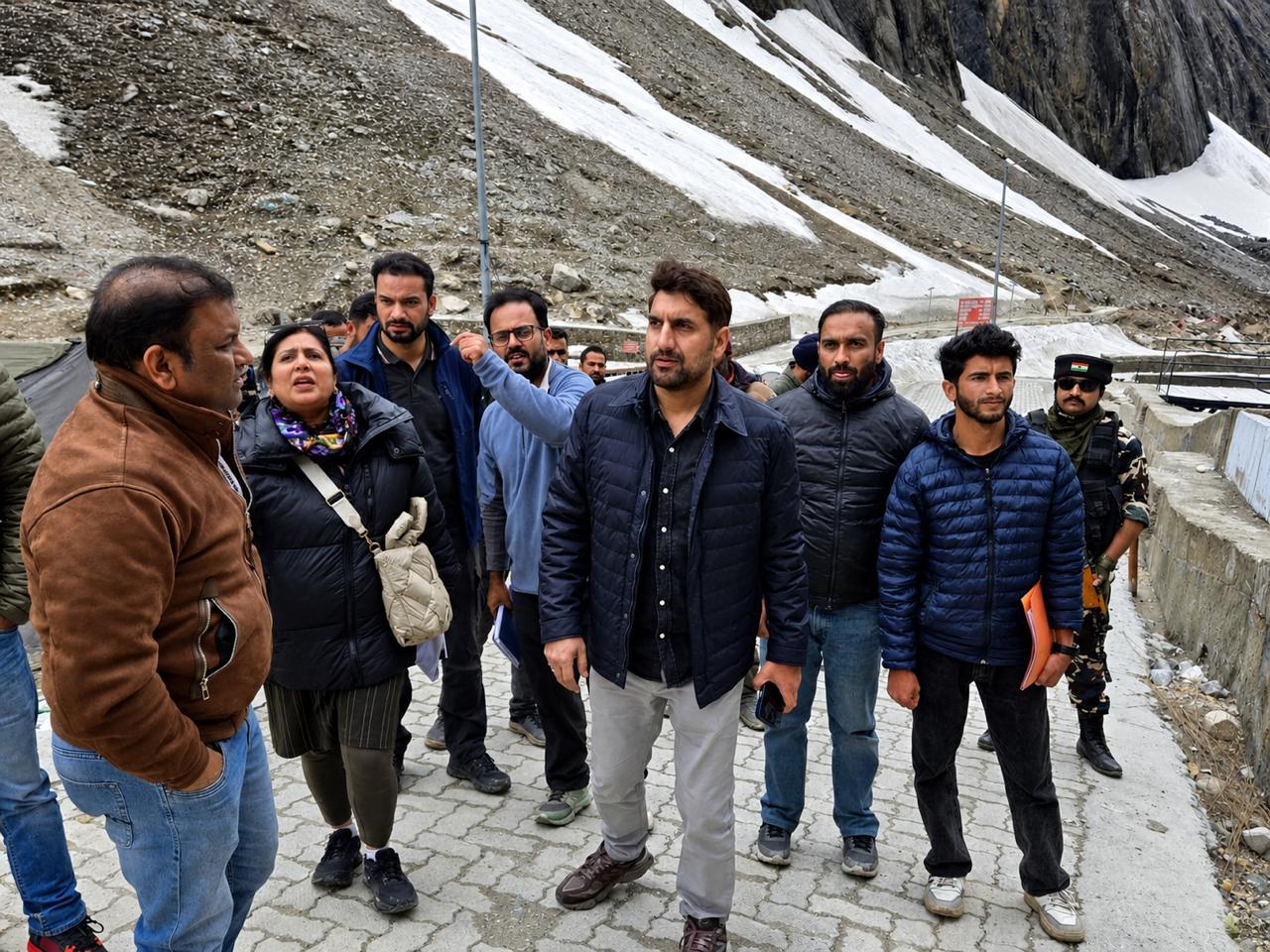
BALTAL, JUNE 20: Secretary, Rural Development Department (RDD) and Panchayati Raj, Mohammad Aijaz Asad, today undertook an extensive review of sanitation arrangements and allied facilities from Baltal Base Camp to the Holy Cave Shrine and Panjtarni to assess preparedness for the forthcoming Shri Amarnath Ji Yatra (SANJY)-2026.
The Secretary conducted an extensive field visit along the Yatra route, covering key locations including Baltal, Domail, Rail Pathri, Brari Marg, Kali Mata Track, Sangam Top, Sangam Down, the Holy Cave Shrine and Panjtarni.
Commencing his tour from Baltal Base Camp, the Secretary reviewed the sanitation infrastructure and facilities established along the entire Baltal axis up to the Holy Cave. He was accompanied by Director General, Rural Sanitation, Anoo Malhotra, sanitation officers (BDOs) deployed at various locations and other departmental officials.
At the Holy Cave Shrine area, the Secretary took a first-hand appraisal of the sanitation arrangements and later visited Panjtarni to assess the infrastructure and public amenities put in place for the annual pilgrimage.
During the visit, Aijaz Asad reviewed sanitation facilities, health camps, solid waste management systems and other essential amenities established for the convenience of pilgrims. He assessed the overall preparedness and stressed the need to ensure that all facilities remain fully functional and operational well before the commencement of the Yatra.
The Secretary also visited health camps and reviewed the waste management mechanisms put in place across camps and designated locations. He was informed that a four-stream waste segregation system has been introduced for effective and scientific management of waste generated during the pilgrimage.
Emphasising environmental sustainability, he directed officers to ensure strict adherence to waste segregation protocols and maintain cleanliness along the entire route. He reviewed the functioning of toilets, washrooms, dustbins, grey water drainage systems, wet waste segregation sites and plastic waste management units. He also examined the placement of dustbins at strategic locations to facilitate waste disposal at source and promote cleanliness among pilgrims.
While reviewing arrangements at the Holy Cave Shrine area, the Secretary directed officials to ensure regular cleaning, proper maintenance and periodic upkeep of the installed toilets and bathing facilities so that hygienic and dignified amenities are available to pilgrims throughout the Yatra.
Taking stock of the sanitation workforce deployed along the Baltal axis, he instructed officers to ensure adequate manpower at all locations and maintain the highest standards of hygiene and cleanliness throughout the Yatra period. He underscored that all tracks leading to the Holy Cave must remain clean, hygienic and pilgrim-friendly at all times.
The Secretary further directed that dedicated toilet facilities for women pilgrims be earmarked at all major locations with proper and clearly visible signage to ensure convenience, accessibility and dignity for female devotees.
Reviewing the overall sanitation and support arrangements, he instructed all executing agencies to accord top priority to ensuring seamless operation of facilities, strengthening solid waste management systems and undertaking all necessary measures for the smooth conduct of the Yatra.
Advocating sustainable waste management practices, Aijaz Asad called for the adoption of a zero-landfill approach along the entire pilgrimage route to minimise environmental impact and ensure scientific disposal of waste.
Reiterating the Government’s commitment to providing safe, clean and efficient facilities to pilgrims, the Secretary stressed the need for close coordination among all stakeholder departments and agencies to ensure seamless arrangements for the successful conduct of Shri Amarnath Ji Yatra-2026.