SAMBA, MAY 09: With the Government of India gearing up for the implementation of the proposed Viksit Bharat–G-RAM-G Act, 2025, the district administration Samba has intensified efforts to “clear the decks” by ensuring completion or rational closure of pending MGNREGA works in a transparent and time-bound manner.
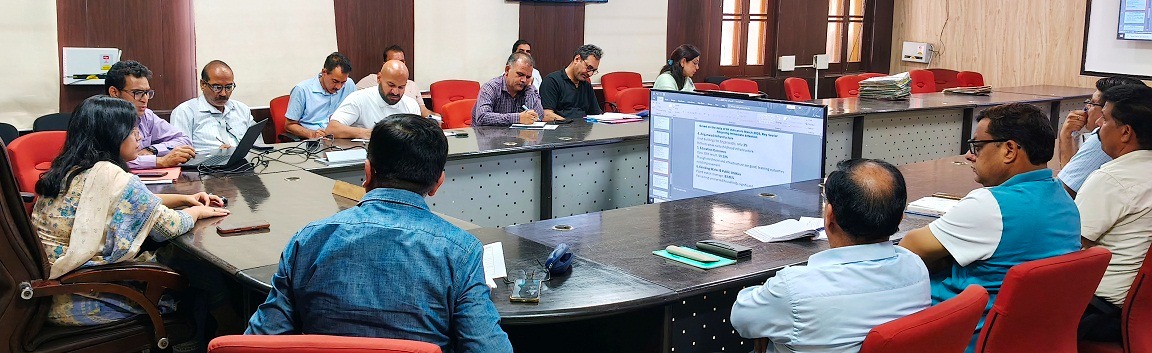
In this regard, a meeting of the District Level Committee (DLC) constituted under the advisory issued by the Ministry of Rural Development (MoRD), Government of India vide dated February 24, 2026, was convened today under the chairpersonship of Deputy Commissioner Ayushi Sudan.
The advisory mandates States and UTs to undertake a focused drive for completion of feasible works and closure of non-feasible works after due verification, while placing “accountability and transparency at the heart of the process. The advisory further stresses on giving priority to completion of ongoing works before taking up new works and makes physical verification and documentation mandatory.
During the meeting, the Chairperson directed all committee members to undertake inspections strictly as per the prescribed mandate. She emphasized that every member of the committee shall inspect either 10 percent or 25 of the proposed works, whichever is lower, for post-review closure. She further instructed that site inspections must invariably involve at least one administrative and one technical member so as to verify eligibility in accordance with the State Financial Rules.
The committee members were also directed to capture geo-tagged photographs during inspections and upload the same on NREGASoft to ensure transparency, accountability and proper documentation. The Deputy Commissioner remarked that “facts on the ground must speak louder than files,” underscoring the importance of physical verification before closure of works.
Earlier, Assistant Commissioner Development Samba, Rafiq Ahmad Jaral apprised the committee through a detailed presentation that a total of 515 ongoing works are presently under review in the district, including works having zero expenditure, expenditure up to 30 percent and those with expenditure above 30 percent. He informed that the feasibility of each work shall determine whether it is to be completed or closed as per the prescribed norms.
It was informed that the highest number of works, numbering 474, fall under Category-II (0–30% expenditure), which have been reported by the concerned Block Development Officers as non-feasible and recommended for closure. However, the committee observed that a second layer of scrutiny is essential to “leave no stone unturned” in maintaining transparency and accountability in the process.
The Deputy Commissioner directed all concerned officers to complete the entire verification and inspection exercise within a period of two weeks positively, for ensuring smooth transition and effective implementation of future rural livelihood initiatives.