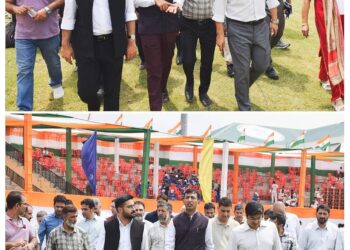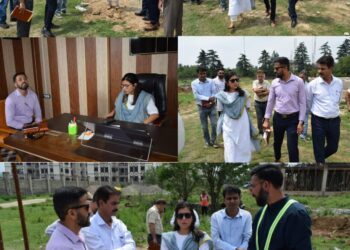
SRINAGAR, AUGUST 10: More than 100 tribal pulse farmers came together at the Dryland Agriculture Research Station (DARS), Rangreth, SKUAST-K, for a one-day Field Day-cum-Training and Input Distribution Programme, gaining expert guidance on climate-resilient pulse cultivation, improved production technologies and sustainable farm management practices.
Organised by the All India Coordinated Research Project (AICRP) on Pulses under the Tribal Sub Plan (TSP) activities of DARS Rangreth, the programme brought tribal farmers face-to-face with scientists and agricultural experts from leading research institutions, with a focus on strengthening pulse cultivation under tribal and rainfed conditions.
The programme was chaired by Dr. Aditya Pratap, Project Coordinator, Kharif Pulses, ICAR-IIPR, Kanpur and Associate Director Research, DARS Rangreth. Scientists and officials from CSK Himachal Pradesh Krishi Vishvavidyalaya, Palampur and ICAR-NBPGR, New Delhi, along with officers from line departments, also participated.
As Chief Guest, Dr. Aditya Pratap highlighted government policies and schemes aimed at promoting pulse production and expressed his commitment to strengthening Jammu and Kashmir’s participation in the national pulse development scenario. He also appreciated the research and outreach initiatives of DARS Rangreth.
Dr. Kuldeep Tripathi, Senior Scientist, ICAR-NBPGR, New Delhi, highlighted the importance of conserving local crop varieties for maintaining agricultural biodiversity. He noted that indigenous varieties can offer valuable traits such as resilience to regional pests, drought and poor soils, making them important genetic resources for developing climate-resilient crops.
Prof. Mohammad Ashraf Bhat, Associate Director Research, DARS Rangreth, emphasized the importance of sustainable pulse production, climate-resilient varieties, improved production technologies and better farm management practices suited to tribal and rainfed farming conditions.
Dr. Ajaz Ahmad Lone, Principal Investigator, AICRP on Pulses, Srinagar Centre, highlighted the mandate of the AICRP-Pulses programme and its role in strengthening pulse production and contributing to national food and nutritional security.
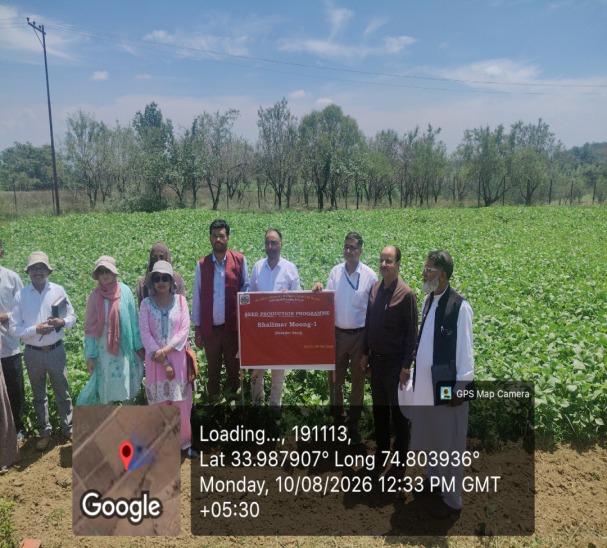
The programme featured an interactive session where farmers discussed their field-level challenges with scientists and sought technical guidance. The participating farmers also visited various research and seed-production trials at DARS Rangreth and appreciated the ongoing work of AICRP-Pulses scientists.
As part of the outreach initiative, bio-inputs and agricultural toolkits were distributed among the tribal farmers, enabling them to adopt improved and sustainable cultivation practices.