
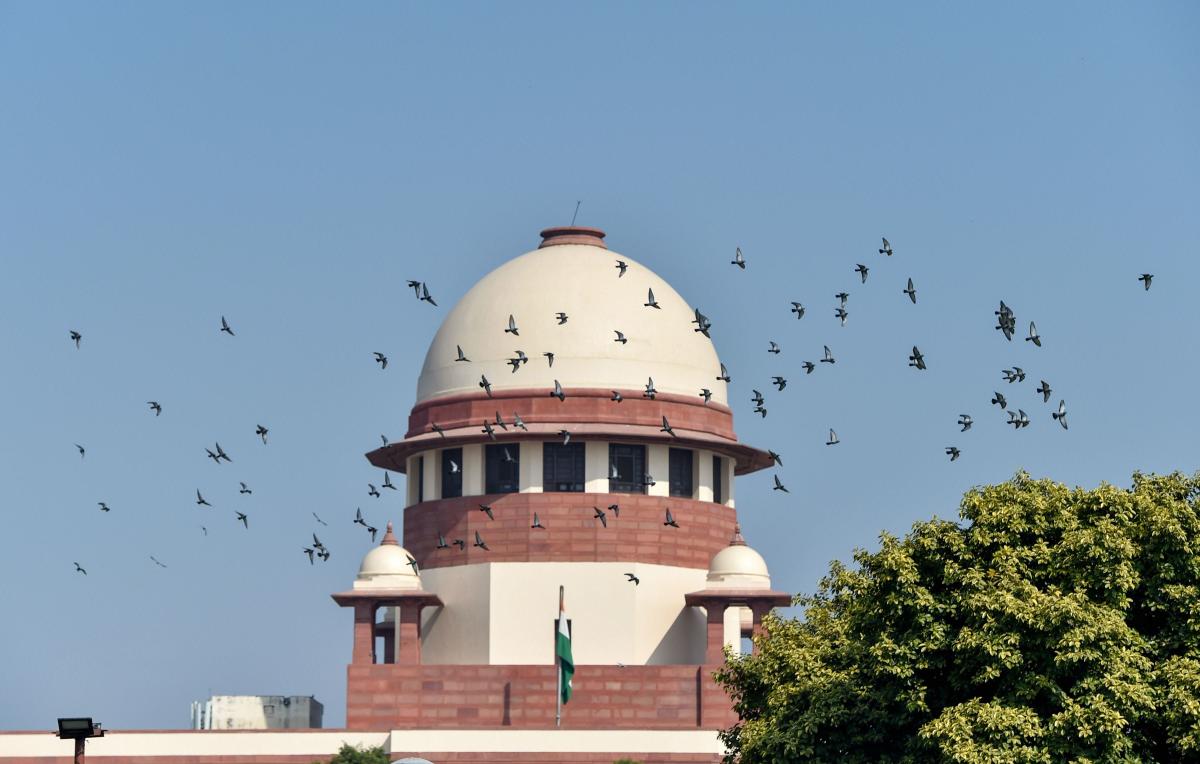
New Delhi: The three-page legislation — The Places of Worship Act, 1991 — is at the centre of the row over videographic survey carried out at the Gyanvapi mosque in Varanasi, where a Shivling was purportedly discovered.
The law has been invoked by the Committee of Management, Anjuman Intezamia Masajid Varanasi, which manages the Gyanvapi mosque, before the Supreme Court, saying mischievous attempts were being made to change the character of the mosque, which existed for 500 years.
In the Ayodhya judgment, the Supreme Court had said that the Act is intrinsically related to the obligations of a secular state and it reflects the commitment of India to equality of all religions.
However, in the Gyanvapi mosque matter, the Act will be put to legal scrutiny and face a test, in view of the ethos of secularism.
A bench comprising Justices D.Y. Chandrachud, Surya Kant, and P.S. Narasimha observed that the survey of a structure to ascertain its religious nature is not barred under the Act.
The committee moved the top court under Order 7, Rule 11 of the Civil Procedure Code against the maintainability of the suit, filed by five Hindu women seeking enforcement of their right to worship Goddess Shringar Gauri and other deities inside the mosque.
The masjid committee has also questioned the appointment of a commissioner for the video survey of the mosque, as it was barred under the Places of Worship (Special Provisions) Act, 1991, and pointed at the fallout of entertaining a suit in gross violation of the provisions of the 1991 Act.
The counsel representing the masjid committee argued in the apex court that similar mischief is being attempted in connection with four-five other mosques and objected to the trial court order to protect an area which had been used for the last 500 years by Muslims as ‘wuzu khana’ (ablution pond).
The Places of Worship Act, 1991 had its own share of controversies. The then Union Home Minister, S.B. Chavan, while moving the Bill in the Lok Sabha had said that it is a measure to provide and develop our glorious traditions of love, peace and harmony.
However, the BJP, then main Opposition party, had opposed the Bill tooth and nail, and termed it as another attempt by the Congress government to appease the minorities.
The Central government notified the Act to forestall fresh claims by any community about the previous designation of any religious place of worship and also subsequent attempts to regain land, on which they stood.
The Places of Worship Act, 1991 begins by saying, “An Act to prohibit conversion of any place of worship and to provide for the maintenance of the religious character of any place of worship as it existed on the 15th day of August, 1947, and for matters connected therewith or incidental thereto.”
Section 4 of the Act says, “It is hereby declared that the religious character of a place of worship existing on the 15th day of August, 1947 shall continue to be the same as it existed on that day.”
The Section 4(2) of the Act says any suit, appeal or other proceeding with respect to the conversion of the religious character of any place of worship, existing on August 15, 1947, is pending before any court, tribunal or other authority, the same should abate, and no fresh suit or legal proceedings would be instituted.
And, the proviso to this section clarifies that only those litigations are allowed, where conversion has taken place in the religious character after August 15, 1947. The offence under the Act is punishable with imprisonment for a term which may extend to three years and also a monetary penalty.
According to the Act, if a person attempts to convert any place of worship, or is part of a conspiracy, she/he can face a jail term.
The Act has put the Ram Janmabhoomi-Babri Masjid dispute outside its domain of operation. However, the Supreme Court in its Ayodhya judgment cited its importance. In November 2019, the Supreme Court ruled in favour of the Hindu side paving the way for the construction of Ram temple in Ayodhya.
The apex court had then said The Places of Worship Act is intrinsically related to the obligations of a secular state and it reflects the commitment of India to the equality of all religions.
“Above all, The Places of Worship Act is an affirmation of the solemn duty which was cast upon the state to preserve and protect the equality of all faiths as an essential constitutional value, a norm which has the status of being a basic feature of the Constitution. There is a purpose underlying the enactment of The Places of Worship Act. The law speaks to our history and to the future of the nation,” the top court had said.
The five-judge bench had said: “Historical wrongs cannot be remedied by the people taking the law in their own hands. In preserving the character of places of public worship, the Parliament has mandated in no uncertain terms that history and its wrongs shall not be used as instruments to oppress the present and the future.”
The apex court had said The Places of Worship Act imposes a non-derogable obligation towards enforcing “our commitment to secularism under the Indian Constitution and the law is hence a legislative instrument designed to protect the secular features of the Indian polity, which is one of the basic features of the Constitution”.
“Non-retrogression is a foundational feature of the fundamental constitutional principles of which secularism is a core component. The Places of Worship Act is thus a legislative intervention which preserves non-retrogression as an essential feature of our secular values,” it had said.
On May 20, 2022, the top court noted that ascertaining the religious character of a place of worship through a procedure known to the law, will not fall foul of The Places of Worship Act, 1991. The top court has shifted the trial of the suit by the Hindu parties from civil judge, senior division, to the district judge.
The top court said its May 17 interim order — protecting the ‘Shivling’, purportedly discovered during the survey, and free access to Muslims for ‘namaz’ — will remain operational for eight weeks, after the district judge’s decision in the matter, so as to allow the aggrieved parties to appeal against the decision.
The Supreme Court has scheduled the Gyanvapi case for hearing in July.