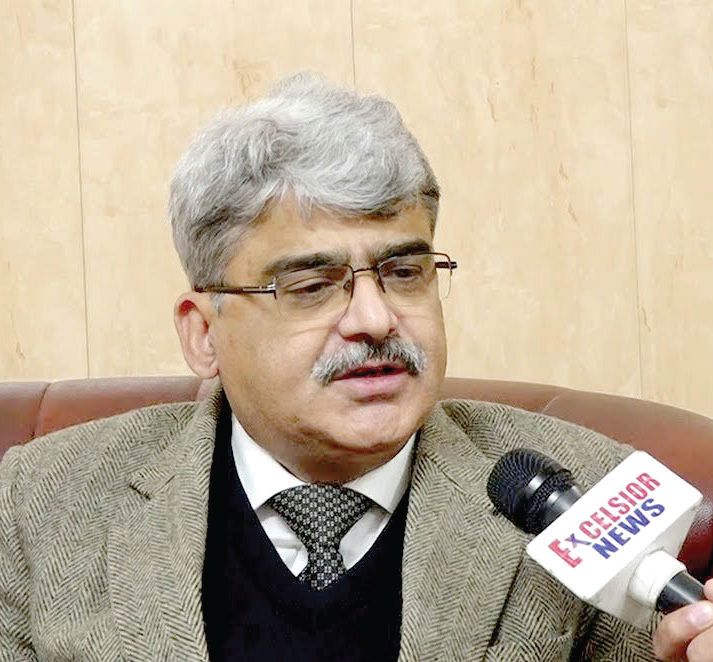
Rajiv Kumar, the Chief Election Commissioner (CEC), recently stated that there is a void in J&K that needs to be addressed. He was referring to the conduct of elections in the region, where the last time voting took place was in 2014 and resulted in the creation of the PDP-BJP coalition government, which was ultimately unsuccessful but had a significant political effect. All of this has now trickled down to the full election commission’s upcoming visit to J&K, which will be led by the CEC and gather input from the relevant officials as well as representatives of all the political parties. Is it possible that the visit will affect and speed up the announcement of election dates? Should we expect an immediate decision to offer the people a chance to have a popularly elected government in place?
First, the CEC’s remarks on the present need in J&K gave people a hint that something was in the works and then came reports of the ECI team visiting the UT within a few days. People’s expectations are high that the electoral scene will finally begin to unfold, reviving after a short death, and that an announcement will be made soon. After all, they are in greater need than anyone else because their problems are worsening by the day and they have been left to endure. Even though the present administration is doing everything possible for the people’s welfare, the core public service remains absent and has failed to capture the attention of the bureaucratic setup in J&K.
Furthermore, even if the developments concerning the conduct of assembly elections are minor, they are significant for the political parties because that is what they have and that is what keeps them relevant on the political and electoral scene of the UT, which has been missing for nearly 7 years. In some ways, the conduct of elections is crucial not only for bringing the general public to the stage of significance but also for the survival of political parties. It is essential for any political system, and it is no secret that J&K has been suffering from suffocation due to the lack of something vital.
While it is also known that ECI will take its time to assess and comprehend the ground situation, the fact that it has already recognised the existing vacuum will have an impact on decision-making—something that will benefit J&K and its people. However, the ECI must take the necessary measures to enable elections in J&K as soon as possible and fulfil its responsibility of ensuring that the people of the UT exercise their constitutional right to vote and choose their government. There is an overwhelming likelihood that the vacuum will be filled and the suffocation will end: we don’t know when, but the first step will be the departure of the ECI team from Delhi for J&K.