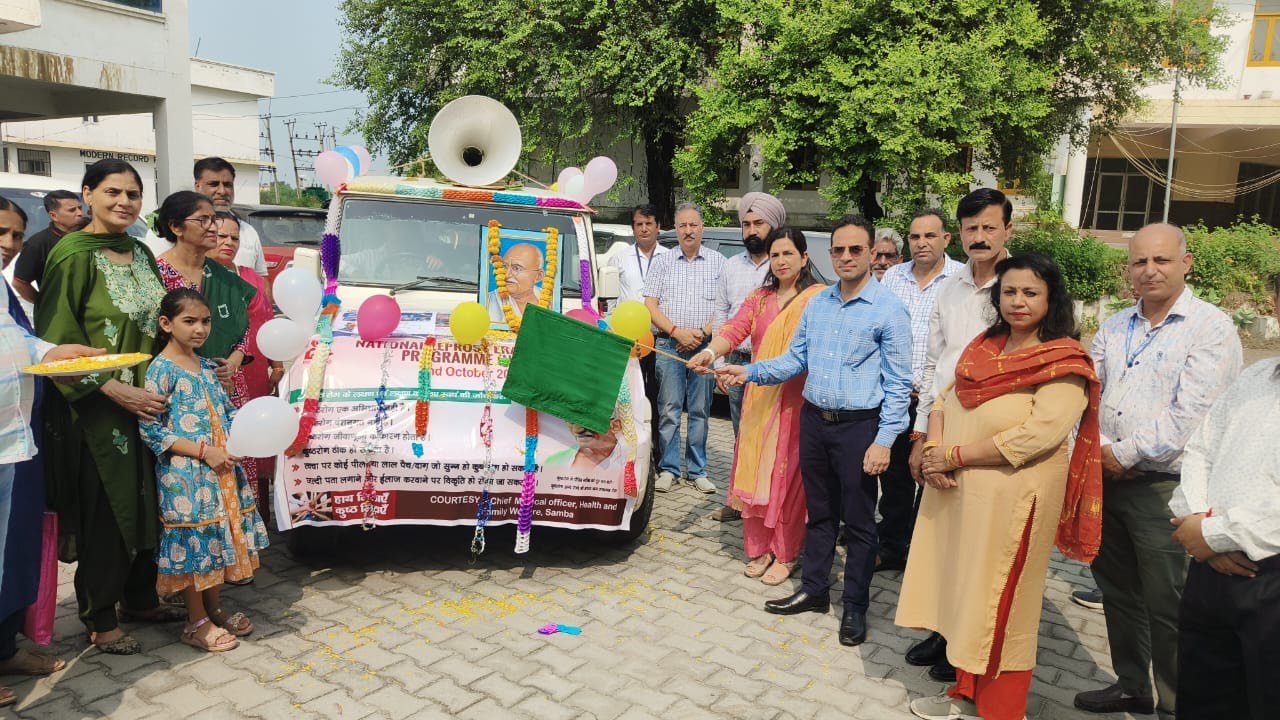
SAMBA, OCTOBER 2: In a significant public health initiative coinciding with Gandhi Jayanti and marking the culmination of Sewa Pakhwada, the District Administration Samba today launched an extensive Leprosy Awareness Campaign with the flagging off of a specially-equipped Awareness Van. The event was led by Additional Deputy Commissioner Samba, Jagdish Singh, alongside Chief Medical Officer Dr. Vidhi Bhatial, District Health Officer Samba, Block Medical Officers and senior officials from the Health Department.
The launch of this awareness van represents a crucial step forward in the district’s commitment to eliminating leprosy through early detection, comprehensive treatment and sustained public education. The mobile awareness unit has been equipped with carefully crafted audio messages and jingles designed to disseminate vital information about leprosy – its causes, symptoms, treatment options and prevention measures – directly to communities across the district. This door-to-door approach aims to break down barriers of misinformation and reach populations who may not have easy access to healthcare facilities.
Speaking at the occasion, ADC Samba, Jagdish Singh highlighted the multifaceted objectives of this campaign, emphasizing that leprosy elimination requires not just medical intervention but a comprehensive societal response. He commended the Health Department for their tireless efforts in preparing this initiative and stressed that early detection and complete treatment remain the cornerstones of success. The Additional Deputy Commissioner underscored that one of the campaign’s most critical missions is to address and dismantle the social stigma that has historically surrounded leprosy, which often prevents affected individuals from seeking timely medical care.
Chief Medical Officer Dr. Vidhi Bhatial elaborated on the program’s holistic approach, explaining that the campaign extends far beyond awareness generation. The initiative encompasses early case detection through active surveillance, ensuring complete treatment adherence and conducting thorough household contact surveys to identify potential cases at the earliest stage.
Dr. Bhatial emphasized that the program places significant focus on disability prevention and medical rehabilitation services, recognizing that comprehensive care must address both the disease and its potential complications. The Health Department is providing essential support including dressing materials, supportive medicines and specially designed micro-cellular rubber footwear to patients, ensuring they receive complete medical and rehabilitative care. Furthermore, nutrition kits were distributed to leprosy patients during the event, acknowledging the crucial role of nutrition in recovery and overall health management.
The timing of this launch carries profound symbolic significance. Gandhi Jayanti, observed on October 2nd, honors Mahatma Gandhi’s unwavering commitment to the upliftment of marginalized communities and his compassionate approach to those suffering from leprosy. Bapu’s philosophy of inclusive healthcare and dignity for all resonates deeply with this campaign’s objectives. Additionally, the event marks the conclusion of Sewa Pakhwada (Sewa Parv), a fortnight-long celebration of service and public welfare initiatives. This convergence of dates amplifies the message that public health is not merely a technical challenge but a moral imperative rooted in service and compassion.
The Leprosy Awareness Campaign represents a comprehensive strategy combining medical intervention, community engagement, and social transformation. By taking healthcare information directly to the people through the awareness van, conducting systematic household surveys, ensuring treatment completion and providing holistic rehabilitation support, the Health Department is creating a robust framework for leprosy elimination. The district administration’s commitment to this cause reflects a broader vision of accessible, stigma-free healthcare that leaves no one behind. As the awareness van begins its journey through the villages and communities of Samba, it carries not just information but hope – hope for early detection, effective treatment and a future where leprosy no longer casts a shadow over lives and communities.